How to Make Money Trading Meme Coins With the Fomo App
You can order the same kind of articles for your own video to boost it on YouTube and Google. Just message the Telegram bot @sat_sit_bot. It writes articles around your video, embeds the video and publishes them on popular niche websites (no ads). Try it free: 50 articles on us.
· based on the channel Orangie Web3
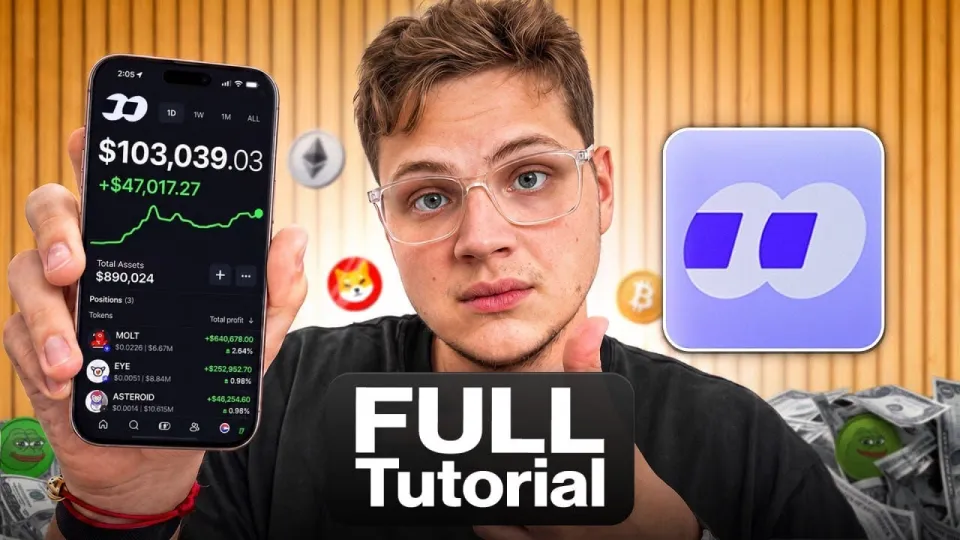
Meme coin trading is a high-risk, high-speed game where profit comes from buying early, sizing small and exiting on a plan rather than on emotion. The practical route for most beginners is a Solana wallet plus an execution tool such as the Fomo trading app, which combines token discovery, charts and buy/sell buttons in one screen. This guide breaks down how the process actually works and where traders lose money.
What a meme coin is and why it moves so fast
A meme coin is a token with no cash flow, product or roadmap behind it — its price is driven almost entirely by attention, liquidity and the behaviour of other traders. On Solana, launching a token costs a few dollars and takes minutes, so thousands of new tickers appear every week and most of them go to zero.
The upside is that a small amount of capital can multiply quickly when a token catches a narrative. The downside is that the same speed works in reverse: liquidity can be pulled, the deployer can dump holdings, and a chart that looked like a breakout can collapse in seconds. Treat every meme coin as a lottery ticket with a price, not as an investment.
How to set up for meme coin trading on Solana
Getting ready to trade takes about fifteen minutes and three decisions: a wallet, a funding route and an execution tool. Skipping any of them usually shows up later as a failed transaction or a lost position.
- Install a Solana wallet such as Phantom or Solflare and write the seed phrase down offline. Never store it in a screenshot or a cloud note.
- Fund the wallet with SOL. You need SOL both for the token purchase and for network fees, so keep a small buffer untouched.
- Connect the wallet to an execution platform. The Fomo app at https://fomo.family/r/orangie is built for this workflow and opens through a referral link.
- Set a hard budget for the whole experiment — an amount you can lose completely without changing your finances.
- Practise one small buy and one sell before chasing anything, so you know exactly where the buttons are when speed matters.
How to make money trading meme coins without becoming exit liquidity
Profit in meme coins comes from a repeatable process, not from a single lucky pick. The traders who survive treat each token as a small, disposable bet and let a few winners pay for many losers.
- Size every position the same. If your budget is $200, risk $10–20 per token. Ten losing trades then cost a fraction of one good run.
- Enter on structure, not on a green candle. Look at how long the token has existed, whether liquidity is locked, and whether holders are concentrated in a few wallets.
- Take partial profits. Selling half at 2x removes the emotional pressure and turns the rest into a free bet.
- Use a stop rule before you buy. Decide the percentage at which you exit a loser, and execute it without renegotiating.
- Avoid tokens minutes old with no volume history. Early entries look cheap, but you are competing with bots that see the launch before you do.
The copy trading trap most beginners fall into
Copy trading looks like the shortcut: follow a profitable wallet and mirror its buys automatically. In practice, the wallet you are watching often bought the token on a separate account before making the visible purchase that drives the price up — so by the time the trade is mirrored, you are buying their exit liquidity.
A safer version of the same idea is to study wallets rather than copy them. Watch which addresses consistently enter early, note the market cap at which they buy, and use that as context for your own decisions. If a token has already run several multiples since the wallet's entry, the trade is over for anyone arriving late.
Common questions and doubts from new traders
Newcomers tend to ask the same few things, and the answers are less exciting than the marketing suggests. The most frequent concern is whether meme coins are a scam — the honest answer is that many are, and the skill lies in losing small when you are wrong.
The second is about missing features: traders repeatedly ask for price alerts inside their tools, which means monitoring positions manually is still part of the job. The third is about recovery after a loss — a drained wallet is a common story, and the right response is a smaller budget and stricter rules, not a bigger bet to win it back. Finally, many ask whether coaching or live sessions exist; structured practice with tiny amounts teaches more than any single explanation.
Risk rules that keep a meme coin account alive
Survival is the strategy, because a trader with capital left always gets another chance. Keep the majority of your crypto outside the trading wallet, use a separate wallet for experiments, and never connect your main holdings to a new platform.
Watch for the classic red flags: liquidity that can be removed by the deployer, a single wallet holding a large share of supply, social channels with fake engagement, and tokens whose only content is a copied logo. Assume every new launch is a loss until the market proves otherwise, and let the numbers — not the community chat — decide whether you stay in.
Useful links
- Fomo trading app, registration through the referral link: https://fomo.family/r/orangie
- Community Discord for meme coin discussion: https://discord.gg/memecoins
- Instagram of the channel author: https://www.instagram.com/orangieyt/
Final thoughts
Meme coin trading rewards discipline far more than intuition: fixed position sizes, pre-set exits and a budget you can lose are what separate a hobby from a slow drain. The Fomo app covers the mechanics of discovery and execution, but the risk rules are yours to write and follow. The walkthrough on the Orangie Web3 channel is a useful starting point for the interface itself, and pairing it with the rules above gives a more realistic picture than any highlight reel. If you want to test the workflow, start with the Fomo app registration and keep the first trades deliberately small.
Key takeaways
- Meme coin trading on Solana runs on speed: the first minutes after launch decide most of the outcome.
- The Fomo app (fomo.family) bundles token discovery, charts and execution in one interface and works through a referral link.
- Copy trading is the most common trap: large wallets often buy on a separate account first, so followers enter at a worse price.
- Position sizing matters more than picking: small, fixed bets on many tokens beat one oversized bet.
- Price alerts are a requested feature on Fomo, so manual monitoring of entries and exits is still required.
Source: How To Make Money Trading Memecoins (fomo app tutorial) · Markdown version
Questions & answers
How much money do I need to start trading meme coins?
You can start with a very small amount, but the budget should be money you can lose entirely. A practical approach is to split it into 10–20 equal positions so a single bad trade cannot wipe the account. Keep a separate SOL buffer for network fees.
Is copy trading meme coins profitable?
Usually not for the follower. Large wallets often buy on a separate account before the visible purchase that moves the price, so mirrored entries arrive late. Studying wallet behaviour as context works better than automatic copying.
Why do most meme coins lose value?
Most launches have no product, thin liquidity and concentrated holdings, so the deployer or early buyers can sell into new demand. Supply of new tokens is effectively unlimited, which means attention and liquidity are spread thin.
Does the Fomo app have price alerts?
Price alerts are one of the most requested features among users, so traders currently monitor entries and exits manually or with external tools. Check the app for the latest feature set before relying on automation.